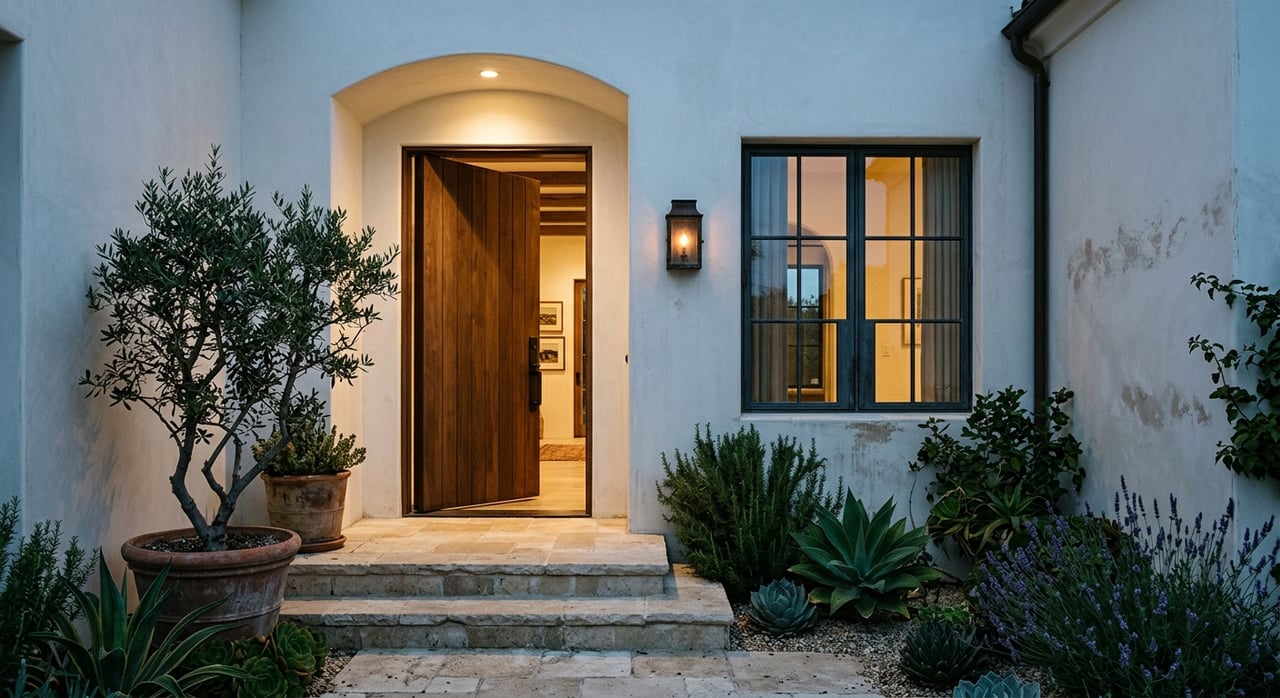
If your Laguna Beach home is hard to price, expensive to carry, or tied to a timeline you cannot ignore, a traditional listing may not be your only strong option. In a market where the median sale price was about $3.1 million over the three months ending May 2026 and homes took an average of 55 days to sell, the right sales strategy matters. Auction is not automatically better, but in the right situation it can offer more certainty, a faster process, and focused buyer competition. Let’s dive in.
Why auction can make sense in Laguna Beach
Laguna Beach is not a one-size-fits-all market. Many properties are highly distinctive, and that can make pricing more complex than it looks on paper. When a home does not fit neatly into recent comparable sales, an auction can become a practical way to let the market set the price through competitive bidding.
Auction can also appeal when you want a defined sale date. Instead of waiting through an open-ended listing period, you launch within a set marketing window and work toward a clear decision point. For some sellers, that certainty is just as valuable as the final number.
What makes a property a strong auction candidate
According to the research, auction tends to be worth considering when at least two of three areas point in that direction: the market, the seller’s situation, and the property itself. That framework is useful because it keeps the decision grounded in strategy, not emotion.
In Laguna Beach, the strongest auction candidates often share a few traits. They are usually unique, difficult to appraise, equity-rich, vacant, or costly to hold. In a high-value coastal market, those factors can add up quickly.
Unique homes often fit better
Some Laguna Beach homes simply do not behave like standard inventory. Bluff-front homes, ocean-view homes, and architecturally distinctive residences may have limited comparable sales. That can make conventional pricing more of an estimate than a precise strategy.
When a property is difficult to benchmark, auction can help create real-time price discovery. Buyers compete on the same terms, and that can bring more clarity than a long period of price adjustments and negotiations.
Limited comparable sales matter
A home with few true comps can stall in a traditional listing if buyers hesitate on value. Even when interest is strong, buyers may interpret a long time on market as a pricing problem. That is one reason unusual or hard-to-appraise properties often stand out as better auction candidates.
In a compressed auction timeline, the focus shifts from prolonged speculation to a defined competitive process. For the right property, that can create momentum that is harder to build in a conventional listing.
Vacant or high-carrying-cost properties stand out
Vacant second homes and underused coastal properties can be expensive to keep. Taxes, maintenance, utilities, insurance, and security concerns do not stop while a home sits on the market. If you are carrying those costs without using the property, speed becomes more important.
That is where auction can be especially practical. A shorter, concentrated marketing period may reduce the financial drag of a long listing cycle and give you a more predictable path to closing.
Seller situations that often favor auction
Auction is not just for distressed sales. The research makes that clear. Today, many sellers choose auction as a deliberate marketing method because it aligns with their goals.
In Laguna Beach, the most common seller-driven reasons tend to be timing, convenience, and cost control. If your priority is not just selling, but selling on a known schedule, auction deserves a close look.
You want a fixed timeline
One of the biggest benefits of auction is timing certainty. You know when the marketing period begins, when the bidding date is set, and when the next steps are expected to happen. That can make planning much easier.
This matters if you have already purchased another home, are moving out of state, are handling an estate, or are entering retirement with a clear transition plan. A defined sale date can reduce stress and help you make decisions with more confidence.
You want fewer open-ended showings
Traditional listings can bring extended showing schedules, repeated prep, and weeks of uncertainty. For some owners, especially those with second homes or privacy concerns, that process feels disruptive. Auction offers a more concentrated path.
The research notes that auctions can reduce numerous unscheduled showings. If you prefer a cleaner launch with a more structured buyer process, that can be a meaningful advantage.
Your listing strategy needs urgency
If a previous listing expired or the property has not gained traction, a different format may help reset buyer attention. Auction creates a focused campaign with a clear deadline, and deadlines can change buyer behavior.
That does not guarantee a better outcome in every case. But when the issue is not the quality of the home, rather the need for stronger urgency and cleaner price discovery, auction can be a strategic alternative.
Auction vs. traditional listing
Auction and traditional listing each have strengths. The better choice depends on what matters most to you: speed and certainty, or flexibility and negotiation room.
Here is a simple side-by-side view.
| Factor | Auction | Traditional Listing |
|---|---|---|
| Timeline | Defined and accelerated | More flexible, often longer |
| Price discovery | Competitive bidding on set terms | Negotiated through offers and counteroffers |
| Showings | More concentrated | Often spread over time |
| Buyer pool | More filtered for ready buyers | Broader, with more varied readiness |
| Contingencies | Often fewer and tighter | Often more room for financing, inspection, and repair negotiation |
| Best fit | Unique homes, timeline-driven sellers, high carrying costs | Sellers who want broader exposure and more back-and-forth negotiation |
Auction favors speed and commitment
Auction is built around a shorter, more intense marketing process. Buyers often need to show proof of funds or mortgage preapproval and may be required to put down earnest money. That tends to filter for buyers who are ready to act.
For sellers, that can mean fewer loose ends. The process is designed to reduce prolonged negotiations and create a known purchase and closing path.
Traditional listing favors flexibility
A conventional sale usually gives buyers more time for financing, inspections, and repair discussions. That can widen your pool of interest and create more space for negotiation. If you want to preserve those options, a traditional listing is often the better fit.
This is especially true if your property may benefit from a buyer who needs time to evaluate condition, financing structure, or renovation costs. More flexibility can sometimes produce a better result than a compressed format.
Reserve vs. absolute auction
Not all auctions work the same way. Two common formats are reserve and absolute auctions. The difference matters.
In a reserve auction, the seller sets a minimum price. In an absolute auction, the property sells to the highest bidder regardless of price. For many Laguna Beach sellers, especially in the coastal luxury segment, a reserve-style approach is the more relevant structure because it provides a price floor.
That does not mean reserve is always the answer. It means the format should match your risk tolerance, goals, and market position.
California disclosure still matters
In California, auction is a sales format, not a shortcut around disclosure obligations. The California Department of Real Estate emphasizes full and honest disclosure, including material facts that affect value, desirability, and intended use when those facts are not readily observable.
That means an auction strategy works best when your disclosures, title information, and property condition materials are organized before launch. A well-prepared due diligence package helps buyers evaluate the opportunity and supports a smoother process.
Preparation is part of the strategy
If you are considering auction, preparation matters as much as timing. You need the property positioned clearly, the facts assembled, and buyer expectations set early. This is one reason auction works best for sellers who are ready for a focused, structured launch.
If instead you want more room for inspection negotiation, repair credits, or evolving terms, a traditional listing may serve you better. The right answer depends on how much certainty you want versus how much flexibility you want to preserve.
How to tell if your Laguna Beach property fits
A Laguna Beach property may be a fit for auction if several of these points sound familiar:
- Your home is unique or difficult to price with confidence
- Comparable sales are limited or imperfect
- You want a fixed sale date
- The property is vacant or a second home
- Carrying costs are high
- You want to reduce open-ended showings
- You are comfortable with a concentrated marketing window
- You value speed and certainty over a long negotiation period
If only one of those is true, a traditional listing may still be the stronger route. If two or more are true, auction becomes much more reasonable to explore.
The bottom line for Laguna Beach sellers
In Laguna Beach, auction is usually most compelling when the home is unique, hard to appraise, vacant, or expensive to hold, and when you want a predictable timeline. Traditional listing remains a strong choice when your priority is broader exposure, more contingency flexibility, and a longer negotiation window.
The key is not choosing the flashiest option. It is choosing the sales strategy that fits your property, your timing, and your goals. If you want clear guidance on whether auction or a traditional listing makes more sense for your Laguna Beach property, connect with Vasi Vangelos for a thoughtful, local strategy conversation.
FAQs
Is auction only for distressed Laguna Beach properties?
- No. The research shows modern auctions are often a chosen marketing strategy, not a last resort.
What kinds of Laguna Beach homes are best for auction?
- Unique, hard-to-appraise, equity-rich, vacant, or high-carrying-cost properties are often the strongest candidates.
Does a Laguna Beach auction mean the home will sell without a price floor?
- Not necessarily. A reserve auction allows the seller to set a minimum price.
Is auction faster than a traditional home sale in Laguna Beach?
- Often yes. Auction uses a compressed marketing period and a defined bidding date, which can shorten the sales timeline.
Do California disclosure rules still apply to auction sales?
- Yes. California disclosure obligations still apply, and auction is not a way around full and honest disclosure.
When is a traditional listing better than auction in Laguna Beach?
- A traditional listing is usually better when you want broader buyer exposure, more contingency options, and more room for inspection and repair negotiation.