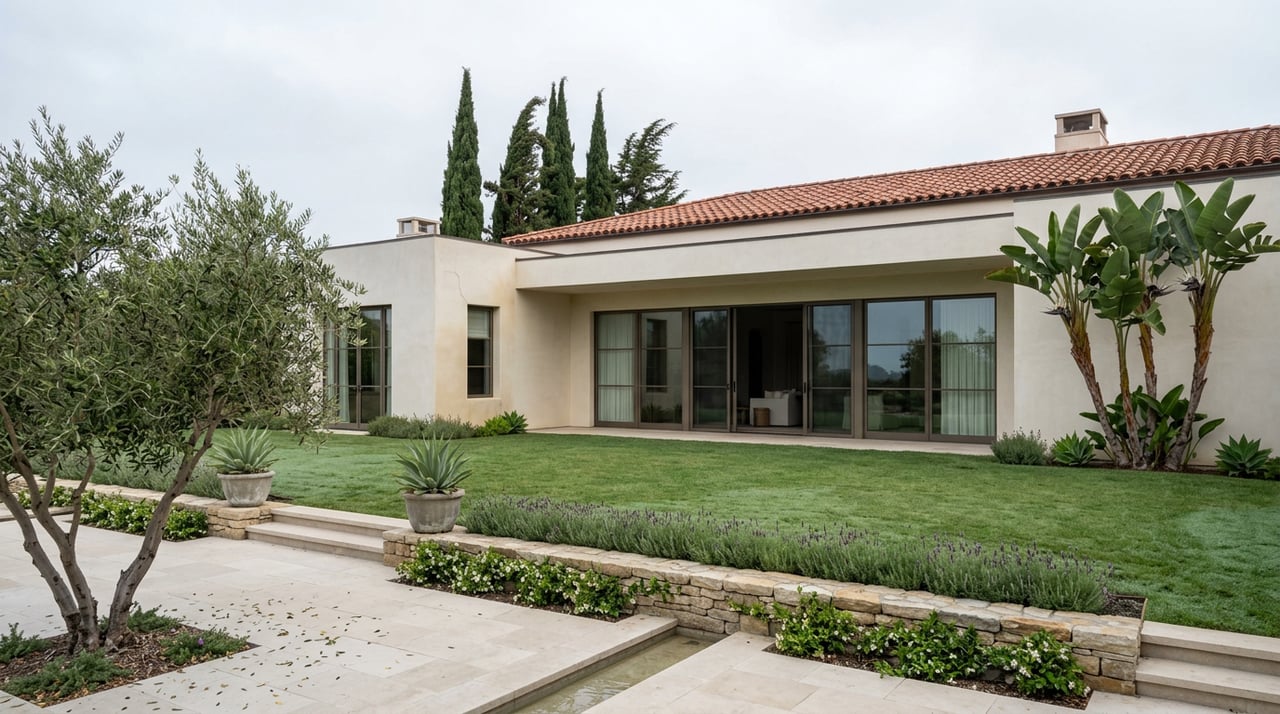
Two buyers, both working with agents, both circled listings in the same email alert this summer. Both homes sat in the low $1.8 millions, both were detached, both fell inside the boundaries locals just call San Juan Capistrano. On paper they were the same purchase. One buyer's lender came back with a monthly number nearly $300 higher than the other's, and neither the price nor the square footage explained why.
The difference wasn't the mortgage. It was a line most buyers don't notice until their loan officer points to it: a special tax tied to a Community Facilities District, known across California by the name of the two legislators who wrote the law in 1982, Mello-Roos.
This is the part of a San Juan Capistrano purchase that a median price can't show you, because the two numbers don't move together at all.
Why the Same Price Tag Can Carry a Different Bill
Proposition 13 capped California's base property tax at 1% of assessed value back in 1978, with increases limited to 2% a year. That protection is why longtime owners in the historic core can carry a fraction of what a new buyer down the street pays on a similarly valued home. It's also why cities and school districts lost their easiest tool for funding growth. Streets, sewers, parks, and school facilities in newly developing areas still needed to get built, so the state gave local agencies a workaround: form a Community Facilities District, sell bonds against future tax revenue, and repay those bonds with an annual special tax charged only to the parcels inside that district's boundary.
That special tax is Mello-Roos. It rides on the same bill as your regular property tax, but it isn't governed by the same 1% cap, and it isn't calculated from your home's value at all. Most districts set the charge using a formula tied to square footage, lot size, or land use category, spelled out in a document called the Rate and Method of Apportionment. Two neighbors with different-sized homes on the same street can owe different amounts under the identical CFD.
Which means the tax follows the district, not the market. A home's price can climb for a decade while its Mello-Roos bill stays flat, or escalates on a schedule that has nothing to do with what a buyer paid.
Where the Line Actually Lands in San Juan Capistrano
Newer master-planned pockets carry it. Older ones generally don't. Pacifica San Juan is one example, where homes are assessed individual CFDs tied to square footage on top of a base property tax rate near 1.04%. Rancho Madrina, the gated Spanish and Mediterranean-style enclave built between 2005 and 2007 just south of Marbella Country Club, is also financed under a Community Facilities District, a detail that shows up in the community's own marketing to buyers evaluating the neighborhood. Push further south toward the villages that border the city, Esencia, Sendero, and Rienda within Rancho Mission Viejo, and you're looking at some of the more layered CFD structures in the county, with multiple overlapping districts covering schools, roads, and community-specific amenities.
Contrast that with Los Corrales, a smaller enclave where current listings have specifically advertised no monthly HOA dues and no Mello-Roos, a detail sellers there treat as a selling point precisely because it's the exception rather than the rule. The blocks around the Mission and Los Rios Street, some of the city's most established residential ground, generally predate the CFD financing era entirely.
None of this tracks neatly with price. In one recent snapshot, Zillow's neighborhood-level figures put typical values as low as roughly $893,000 in the Bridgepark District and as high as roughly $3 million in Covenant Hills Village, all inside the same city boundary. A buyer comparing two listings by price per square foot alone has no way to see which one is also carrying a second, separate annual tax bill.
The Math That Changes the Comparison
Industry lenders frame it simply: a $3,600 annual Mello-Roos charge adds $300 to your monthly housing cost, and that amount counts against your debt-to-income ratio exactly like your mortgage payment, HOA dues, and base property tax. It's not a rounding error. In CFD-heavy pockets of Orange County, the combined effective property tax rate, base 1% plus every local add-on including Mello-Roos, can run 1.5% to 1.7% of the purchase price, compared with roughly 1.1% to 1.3% in areas without a district.
Run that spread against San Juan Capistrano's own recent numbers. Redfin's tracking showed a median sale price of $1.8 million over the three months ending June 2026, up 14.5% year over year. At the low end of that effective-rate range, the annual tax burden on a home at that price lands near $19,800. At the high end, it's closer to $30,600. That's a difference of roughly $900 a month, before a single dollar of principal or interest is factored in, and it's a gap two homes at the identical list price can carry without either seller ever mentioning it in the listing remarks.
Different trackers don't even agree with each other over the same stretch of the year. Zillow's home value index put the typical San Juan Capistrano home at $1,353,222 as of the end of May 2026, while Redfin's own three-month window put the median sale price nearly half a million dollars higher. Neither is wrong. They're measuring different slices of the same city, one where Realtor.com has separately listed the golf-course community of Marbella at a median around $3,120,000 while other pockets trade well under $1 million. When trackers looking at the same season land this far apart, the property-level detail, including whether a specific parcel carries Mello-Roos, matters more than any citywide average.
The District That's Actually Getting Cheaper
Here's the twist that most buyer guides miss entirely. The Orange County Treasurer-Tax Collector's office has confirmed that Capistrano Unified School District will eliminate Mello-Roos taxes for some tax rate areas. That's not a hypothetical future savings pitched by a seller. It's an active change to a real cost line, and it means the CFD math on a given SJC parcel isn't fixed forever. A home that carried a school-related special tax last year could see that specific charge drop off, while a neighboring CFD funding roads or parks continues untouched.
That single fact should reshape how a buyer reads an older listing sheet or a prior year's tax bill. The number printed there may already be out of date. The only way to know what a specific parcel owes today is to check today.
How to Actually Verify It Before You Write an Offer
- Pull the property up on the Orange County Treasurer's Mello Roos Tax Map, which shows the special tax line by parcel and links back to the bond issuance behind it.
- Request the preliminary title report early. Recorded CFD liens and formation documents show up there before they show up anywhere else.
- Ask for the Rate and Method of Apportionment and the bond documents directly, so you can see the current levy, the maximum allowed levy, and how the schedule increases each year.
- Bring the exact annual figure to your lender before you're deep into escrow. It counts against your qualifying ratio the same way a mortgage payment does, according to standard lending guidance on how special taxes are treated.
- Ask whether the parcel's share of the bond can be prepaid in a lump sum. Many California CFDs allow it, and once it's paid, the annual charge for that specific district disappears from future bills.
A Short FAQ
Does Mello-Roos go up when my home's value goes up? No. The special tax is set by a formula tied to square footage, lot size, or land use, not assessed value. It can still increase on its own schedule, often tied to a fixed percentage or an inflation index, but that increase happens independent of what your home is worth.
Will it show up automatically when I search listings? Not reliably. It appears as a special assessment on the property tax bill itself, not as a standard search filter, which is exactly why two similarly priced homes can look identical online and carry very different real costs.
Does it ever go away? Yes, once the bonds behind it are repaid, typically 25 to 40 years from issuance in most Orange County districts, or sooner if a homeowner prepays their share. Capistrano Unified's move to eliminate the tax in certain tax rate areas is a live example of that timeline playing out right now.
Is this something I need a lawyer or accountant to sort out? The verification steps above (title report, RMA, Treasurer's map) are documents any buyer's agent should already be pulling. For how a specific charge affects your loan qualification or tax situation, that conversation belongs with your lender and a tax professional, not a blog post.
If you're comparing two San Juan Capistrano addresses that look identical on paper, the difference worth finding before you write an offer usually isn't in the finishes. It's in the tax bill. Vasi Vangelos can pull the CFD history on a specific parcel before you get attached to a number that isn't the full picture. Let's Connect.